Mile Markers and Mini Marts: A 10K Kanda River Run Built on Konbini Stops
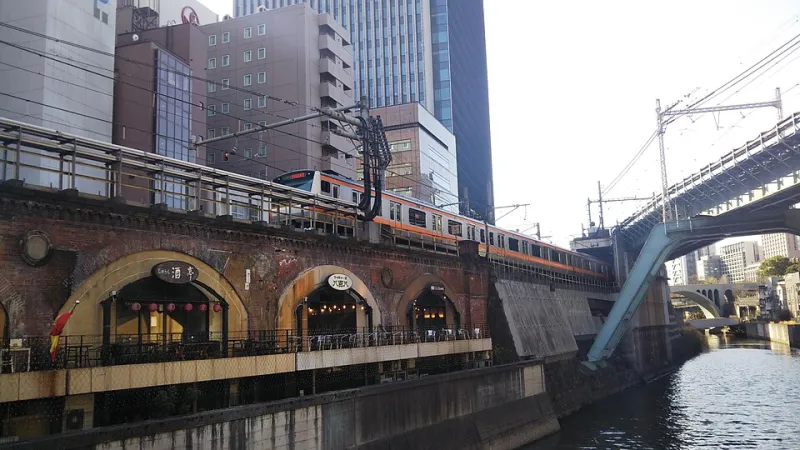
Photo: Kirin7739, CC BY 4.0, via Wikimedia Commons
Tokyo's Kanda River is not the city's showiest running corridor. That is exactly why it works. The water slips past apartment blocks, small bridges, and neighborhood bakeries, and the riverside path gives you a mostly flat line with frequent train stations. It also gives you something the Imperial Palace loop cannot: a convenience store every few minutes. This 10K out-and-back from JR Iidabashi Station uses those konbini as aid stations, so you can run light and still have water, snacks, restrooms, and an easy bailout.
The Route at a Glance
- Start and finish: JR Iidabashi Station, West Exit
- Distance: about 10K out-and-back
- Surface: paved riverside path, short sidewalks, bridge crossings
- Aid stations: 7-Eleven, Lawson, and FamilyMart clusters near Iidabashi, Ichigaya, Yotsuya, and the Shinjuku edge
- Train bailouts: JR Iidabashi, Ichigaya, Yotsuya, Shinjuku; several Tokyo Metro exits
- Best window: early morning or weekday evening; avoid midday summer heat
Turn-by-Turn Route Notes
Start at JR Iidabashi Station's West Exit and walk toward the Kanda River. Cross at the Iidabashi bridge area and pick up the signed riverside path heading upstream, which means west. If you are on the north bank, keep the water generally on your left; when the path forces a side switch, use the marked underpass or bridge crossing instead of dodging traffic. The route is not one unbroken promenade, so treat the river as your compass and the bridges as your checkpoints.
From 0 to 1.5K, follow the paved path west under the first set of bridges. This is your warm-up stretch. Watch for cyclists at blind corners and for pedestrians stepping out from stairwells. There is a konbini cluster near Iidabashi for a last-minute water bottle or restroom stop before you settle in.
From 1.5K to 3K, continue toward Ichigaya. The path narrows in places near bridge ramps, so run single file and keep your line predictable. Ichigaya Station is your first real bailout and a good place to top up if the weather is warm.
From 3K to 4.5K, aim for Yotsuya. If the riverside path ends at a street, follow the signed river route rather than inventing a shortcut. Yotsuya Station gives you another aid stop and an easy exit if your legs or the weather turn.
Around 5K, turn around at a clean bridge crossing on the Shinjuku side of the river. The exact turnaround depends on your start and bridge choices, so use your watch and pick a landmark you can recognize on the way back. Turn, retrace your steps, and keep the return trip simple.
From 5K to 10K, run the same path back to Iidabashi. If you have energy left, let the last 2K be slightly faster than the first 2K. If not, finish relaxed. The goal is a useful city run, not a race.
Pacing Cues
The first 2K should feel almost too easy. You are warming up, checking footing, and learning the rhythm of the path. From 2K to 5K, settle into a steady effort you could hold with a short sentence. At the turnaround, take 30 to 60 seconds to walk, sip, and reset. On the way back, hold the same effort through 8K, then lift cadence if you feel good. In summer, add one extra water stop and slow down; Tokyo humidity does not negotiate.
The Konbini Aid Station Playbook
Japanese convenience stores are not just snack shops. They are reliable pit stops with restrooms, ATMs, trash bins, and bottled water. The polite move is to buy something if you use the restroom or linger. Carry a small bill or an IC card, and do not treat the store as a changing room. For mid-run fuel, a banana, onigiri, salt candy, or a sports drink works well. If you are used to US convenience stores, think of it as a corner store with better restrooms and no giant parking lot.
Shared-Path Etiquette
Keep left unless you are passing, and do not stop in the middle of the path to check your phone. Cyclists use these riverside routes too, and they often appear quietly from behind. Yield to families, older walkers, and anyone navigating a stroller or wheelchair. If you need to pass, leave space and avoid brushing past. Early morning is the calmest window; after work, expect more bikes and more people. Carry your trash, keep music low or one earbud out, and remember that this is a neighborhood path, not a closed track.
Train Bailouts and Weather
The beauty of this route is that you are never far from a station. Iidabashi, Ichigaya, Yotsuya, and Shinjuku all give you an exit. If rain starts, the path can get slick at bridge ramps and painted lines. Shorten the run rather than forcing the full 10K. In summer, start before 7 a.m. or wait for the evening. In winter, gloves and a light layer are enough once you are moving.
Post-Run Local Finds
From Iidabashi, walk uphill into Kagurazaka for a coffee and a pastry in the backstreets. The neighborhood has old-school kissaten, small bakeries, and soba shops that reward a post-run appetite. If you finish near Yotsuya, look for a classic coffee shop instead of a chain. Either way, you have earned a sit-down. The Kanda River run is not about chasing scenery. It is about learning how Tokyo fits together at running speed, one bridge and one konbini at a time.