Dry Feet, Clear Turns: Navigating Tokyo's Covered Arcades on a Rainy Day
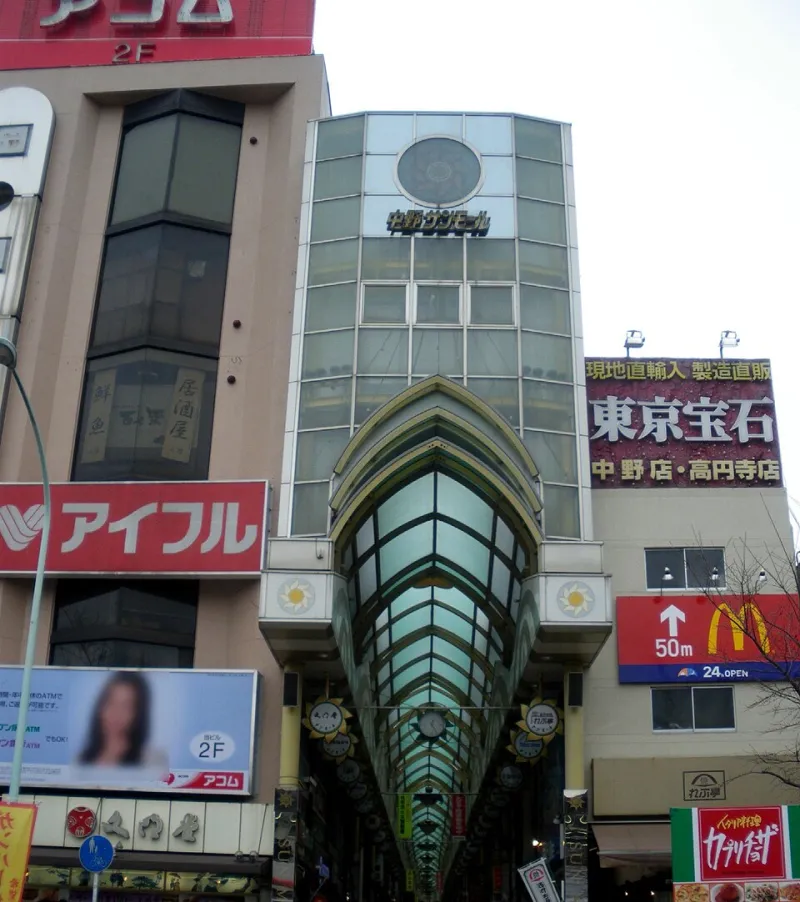
Photo: User:Kentin, CC BY-SA 3.0, via Wikimedia Commons
Tokyo's covered shopping streets are not theme parks. They are working neighborhood corridors with a roof, and on a rainy day they can do something no umbrella can: move you from a train station to a distant block without ever exposing you to the sky. The trick is learning how to read them. Once you understand the entrances, exits, and station connections, a shotengai becomes a weather-proof walking route with snack stops built in.
What a Covered Arcade Actually Is
A shotengai is a shopping street, usually run by a local association of shopkeepers. Many, but not all, are covered by a vaulted roof for long stretches. The roof is not a mall. Shops open onto the street, delivery bikes weave through, and the arcade may stop and start at a major road. Think of it as a strip mall that swallowed a train station, then kept going.
How to Read the Entrance
At the entrance, look for a gate sign with the arcade name, a small map board, and the nearest station exit. Take a photo of the map before you walk in. The main straight line is your spine; side alleys are detours. Shop addresses often use block numbers, so a sign for 1-chome or 2-chome tells you where you are along the street. If you see a train crossing, a major road, or a parking lot, you are probably at an edge.
Station Connections and Bailouts
The best arcades connect directly to a station. Nakano Sun Mall runs straight from JR Nakano Station's north exit, which makes it an easy rain-day start. Asagaya Pearl Center sits by JR Asagaya Station's north exit and gives you a long covered walk with old-school shops. Kichijoji Sunroad connects to JR Kichijoji Station's north exit. Koenji's Pal Shopping Street and Junjo Shopping Street are shorter but useful if you already know the station. If you get turned around, find the nearest station sign and retrace to the main straight.
A Rainy-Day Route That Works
Pick one arcade, walk it end to end, then take the train one stop to another. Start at JR Nakano Station, walk the length of Sun Mall, and come back on the other side of the street if the roof allows. Then ride one stop to Koenji or Asagaya and repeat. You are not trying to connect every arcade on foot. You are using the train as a dry link between covered corridors. That is the wayfinding trick: the roof handles the rain, the train handles the distance.
Arcade Etiquette for US Visitors
Fold your umbrella before you enter, and use the plastic sleeve stands at the entrance if they are provided. Do not walk with a dripping umbrella through a crowded arcade. Eat at the stall or shop where you bought the food, not while weaving through the crowd. Keep your voice low, especially in the evening. Do not smoke outside shops, and do not use an arcade as a picnic shelter for an hour. If you need a restroom, ask a shop or use a station; buying something first is the polite move. Bicycles should be walked, not ridden. Cash is still useful at small stalls, even if the chain stores take IC cards.
Small Finds Worth a Detour
The point of an arcade is not just staying dry. It is the small stuff. Look for a taiyaki counter, a croquette stand, a senbei shop, or an old candy store with bins of cheap sweets. In Nakano Sun Mall, the snack counters and budget shops give you a quick read on the neighborhood. In Asagaya Pearl Center, the pace is slower and the coffee shops feel like they have been there for decades. In Koenji, vintage shops and tiny live houses sit off the main line. If you see a grocery store with a basement food hall, go in. That is where the real rainy-day snacks are.
When You Get Turned Around
Covered streets can feel like a maze because the roof hides the sky. Use these checks: find the station name on a sign, look for the arcade gate you entered, and note the block number. If you are still lost, step into a shop and ask. A simple sumimasen and a point at your map works. Do not rely only on your phone; GPS can drift under a roof. The main straight is usually the safest way back.
The Point of Following the Roof
A rainy day in Tokyo does not have to mean a museum or a mall. Follow the roof, and you get a walking route that is dry, local, and full of small stops. You will not see the skyline. You will see how neighborhoods actually work: shopkeepers sweeping their frontage, delivery bikes finding a gap, and snack stands doing steady business. That is a better rainy-day souvenir than another umbrella.