Let the Current Set the Pace: Asakusa to Odaiba on Foot, Back by Water Bus
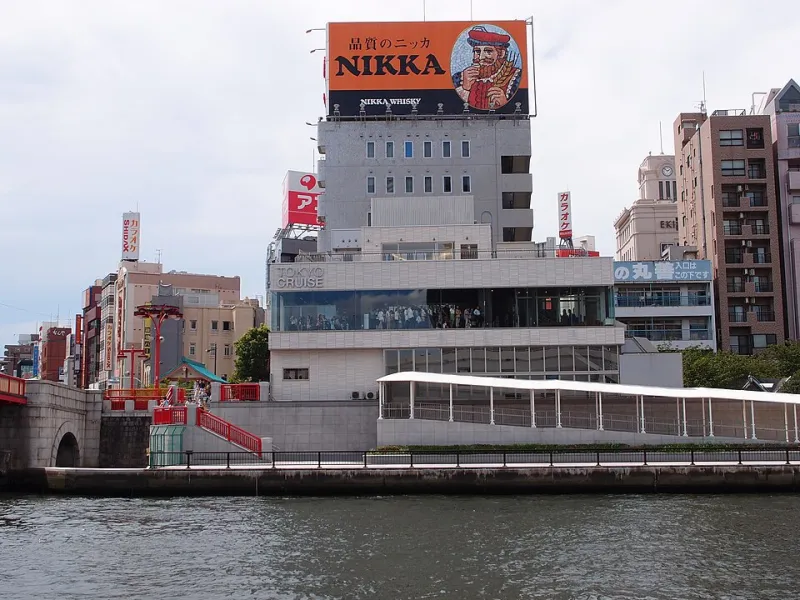
Photo: Guilhem Vellut, CC BY 2.0, via Wikimedia Commons
Tokyo running routes get better when you stop treating the return leg as an afterthought. The Sumida River gives you a clean downstream line from Asakusa toward Tokyo Bay, and Odaiba gives you something rare at the end of a city run: a boat dock. The plan is simple. Start near Azumabashi Bridge, follow the river south, finish at the Odaiba waterfront, then ride a water bus back to Asakusa instead of retracing your steps. It is a point-to-point run that feels like a small commute, which is exactly the kind of low-drama logic a travel day needs.
Start at Azumabashi, Not at the Crowd
Asakusa Station puts you close to the river, but the immediate streets around Senso-ji can be a slow-moving river of their own. Warm up on the quieter blocks near Azumabashi Bridge and drop onto the riverside path there. You are aiming downstream, with the water generally on your right or left depending on which bank you choose. Do not overthink the first kilometer. Pick the side with the widest promenade and the fewest staircases, then settle in.
The early stretch is classic Sumida River running: low bridges, tour boats, joggers, commuters, and the Tokyo Skytree doing its best to photobomb every glance north. Use the bridges as checkpoints rather than obstacles. Komagata, Umaya, Kuramae, Ryogoku, Shin-Ohashi, Kiyosu, Eitai, Tsukuda, and Kachidoki each mark a small change in the river's mood. You do not need to cross every one. Just know that when the path pinches out, a nearby street or crossing will usually put you back on the water.
Promenade Detours Are Part of the Route
The Sumida riverside is not a single uninterrupted boardwalk. It is a patchwork of parks, embankments, apartment-front paths, and short street sections. Around Ryogoku and Tsukishima, expect the occasional detour inland. Some ramps are narrow, some stairs appear without warning, and construction can close a stretch with little notice. Treat the green line on your map as a suggestion, not a promise.
This is also where the route gets interesting. You pass under expressway edges, past small shrines, and through neighborhoods that feel more residential than touristy. Keep an eye out for konbini near Ryogoku and Tsukishima if you need water or a quick snack. Restrooms are scattered around Sumida Park, Ryogoku, Tsukishima, and the Odaiba parks, but they are not evenly spaced. Use them when you see them.
The final push toward Odaiba opens up. The wind picks up, the buildings get larger, and the waterfront starts to feel like a different city. Aim for Odaiba Seaside Park or the nearby water-bus pier. Stop your watch at the dock, not at the mall. You are not done until you know where the boat leaves from.
The Water Bus Is the Return Leg
Tokyo Water Bus runs the Asakusa-Odaiba line, and it is the reason this route works so well. The ride takes roughly 50 to 60 minutes depending on the boat and stops, which is enough time to cool down, stretch, and remember that you do not have to run back. Book ahead when you can, especially on weekends, holidays, and clear-weather afternoons. This is not a subway train that arrives every few minutes. The boat fills up.
Buy your return ticket before you run if your schedule is tight, or check the day's departure times at the Asakusa pier before you start. Arrive at the Odaiba pier at least 15 minutes early. You are sweaty, slightly salty, and not invisible. A little buffer keeps the afternoon from turning into a sprint to the gangway. Confirm the last boat of the day, too. Seasonal timetables shift, and missing the final departure turns a clever route into a platform puzzle.
Keep a Train Plan in Your Pocket
Weather happens. Wind happens. Boats sell out. The good news is that Odaiba has solid backup options. The Yurikamome line connects Odaiba to Shimbashi, where you can switch to the Ginza Line for Asakusa. The Rinkai Line gets you to Osaki and the JR Yamanote loop. Keep a loaded Suica or PASMO card and you can pivot without a long ticket-machine conversation.
If rain moves in or the water bus is full, take the train and call it a successful one-way run. The point of this route is not to be stubborn. It is to use the river for forward motion and let public transport handle the return. That is the whole trick: run downstream, ride back, and leave the doubling-back to someone else.